English · Русский · Español · Հայերեն · Türkçe
Symbolic Directions, 1 Degree = 1 Year: How to Read Long-Term Timing
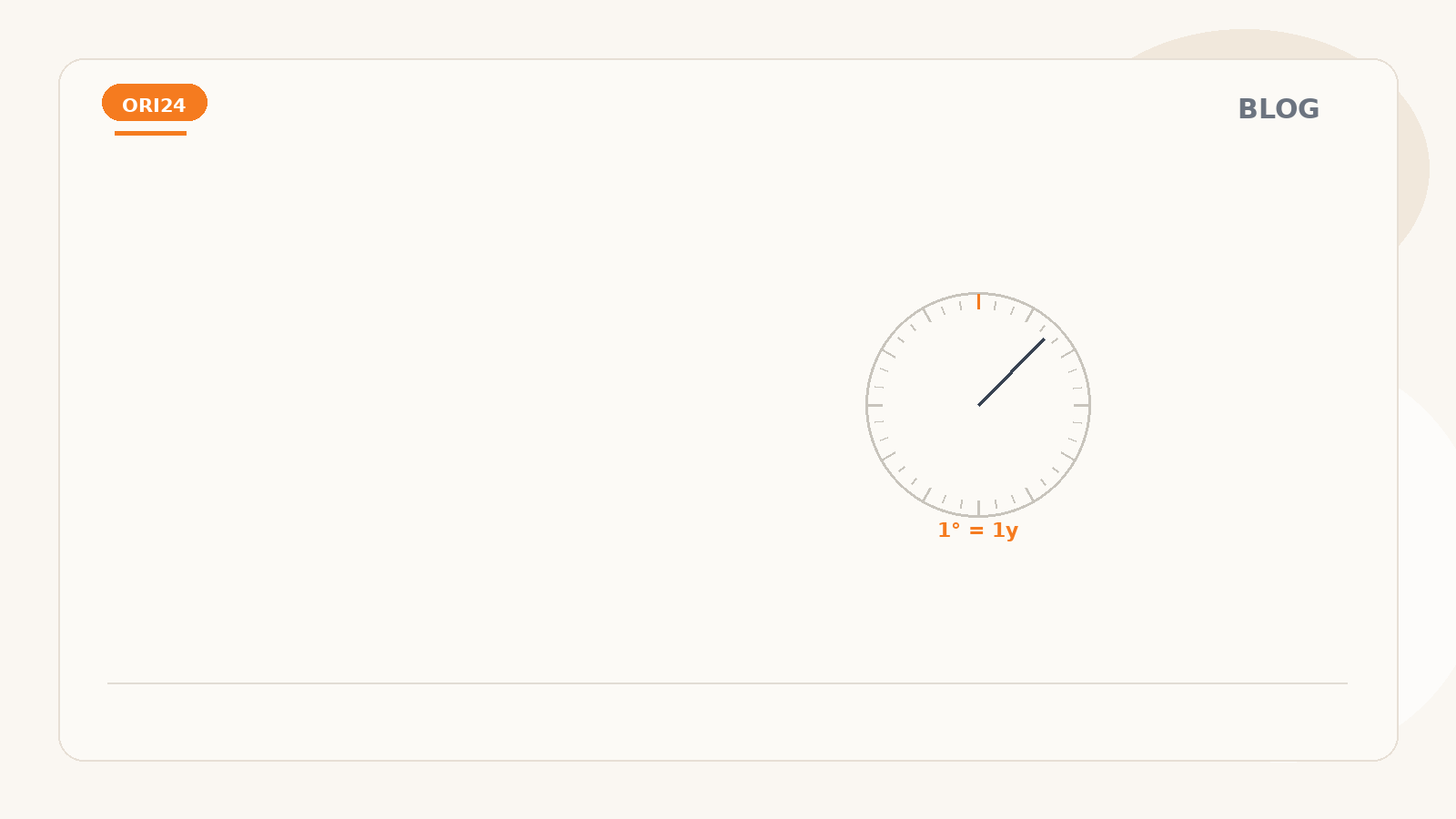
Symbolic directions use a very simple timing idea: one degree of movement corresponds to one year of life. That simplicity is part of the method’s appeal. It gives astrologers another way to time long processes and major developmental chapters.
This is not a daily forecasting tool. It belongs to the slow-timing family, where the goal is to understand longer arcs of change rather than the mood of a particular week.
What the method is good at
Symbolic directions are often used to read long-term activation of natal planets and angles. They can help show when a certain life topic matures, becomes visible, or demands a more concrete response.
Because the method is symbolic, it is usually read in broad developmental terms rather than as a mechanical event promise.
Why the 1 degree equals 1 year idea works so well
Its strength is clarity. The method gives a manageable way to think about life timing over years rather than days. That makes it attractive both to technical astrologers and to people who want a simple timing frame they can understand.
But simplicity does not mean shallowness. Even a simple symbolic model can reveal meaningful long-range structure.
How to read it responsibly
Start with contacts to natal angles, luminaries, and major planets. Then step back and ask what that natal point already means in the person’s chart. Timing only becomes useful when it is connected to the original chart story.
As with other direction methods, repetition across methods matters more than one isolated symbolic hit.
- Read the natal meaning first
- Watch for angle and luminary contacts
- Use other timing methods to confirm the period
When it helps the most
This method is useful when you are trying to understand a longer life chapter and want a cleaner structure than daily transit work can provide.
It can also be helpful when several years seem to belong to one story and you need language for the arc rather than for each separate event.
What to combine it with
Symbolic directions work well with solar arcs, primary directions, and transits. The symbolic method shows the long wave; the other methods help identify when that wave becomes visible.
This is usually where the reading becomes both elegant and practical.
FAQ
Is symbolic direction the same as solar arc direction?
No. They are related families of timing methods, but they are calculated and interpreted differently.
What is the main strength of the method?
Its main strength is giving a clean long-term timing framework that is easy to understand conceptually.
Can one symbolic contact predict an event by itself?
It is safer to treat it as a meaningful period indicator and confirm it with other methods.
Is this method beginner-friendly?
The basic idea is simple, but the reading becomes much better when you already understand the natal chart and some other timing tools.